


What Is a Flowform? An Introduction to Sculptural Glass Work
If you've visited the Yorkshire Glass Fusing Studio website recently, you might have noticed a section that sits a little apart from the workshops and events — a collection of sculptural glass pieces grouped under the name Flowform.
For those who know me primarily through my workshops, it might come as a surprise. But Flowform represents something I've been building towards for a long time: a body of sculptural work that pushes glass into new territory, exploring what the material can do when it's freed from the flat surface of a panel and allowed to take on form, movement and depth.
This blog is my attempt to explain what Flowform is, how it came about, and what I hope people feel when they encounter these pieces.
Where It Started
Glass fusing, at its heart, is a process of transformation. You arrange pieces of glass, place them in a kiln, and watch heat do something remarkable — softening edges, blending colours, creating depth and luminosity that simply didn't exist before firing.
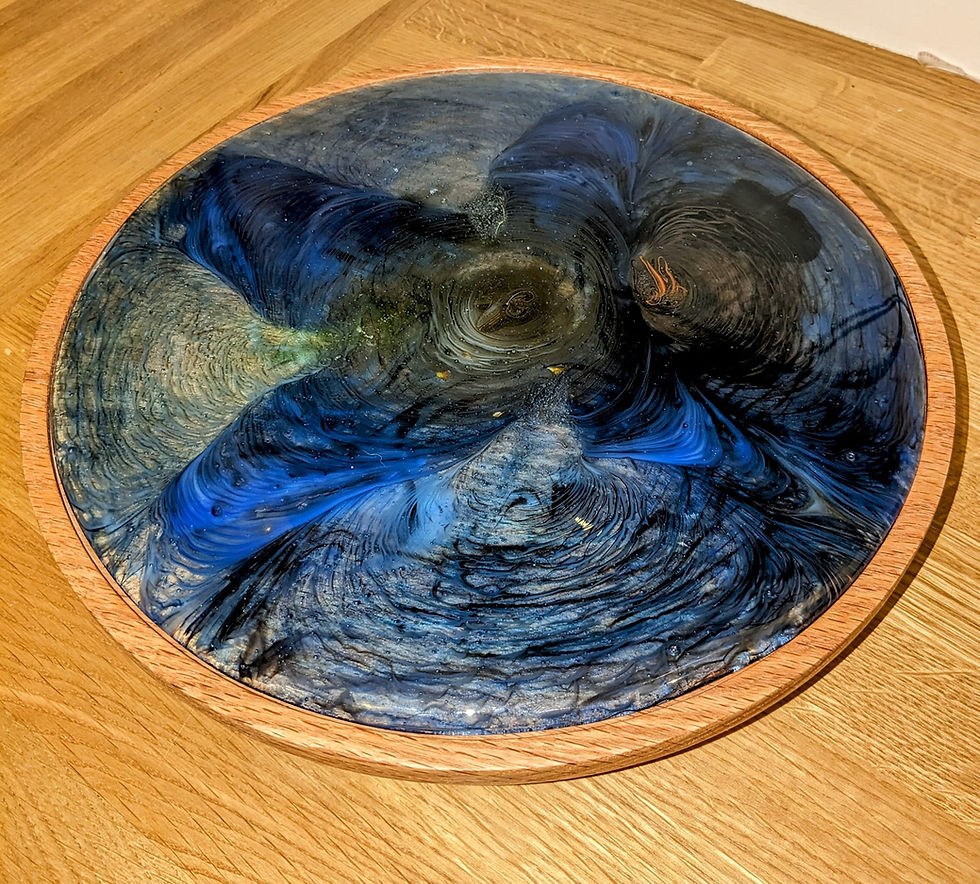
After years of guiding people through that process in workshops, I found myself increasingly drawn to what happened when you pushed it further. What if the glass wasn't just fused flat? What if the heat was used to coax it into curves, descents, sweeping forms that held the memory of movement?
That question became the beginning of Flowform.
What Makes a Flowform Different
A Flowform piece is a hand-formed glass sculpture — something that occupies three-dimensional space rather than sitting against a wall. Each one begins as hand-cut glass, guided through heat and time in the kiln until it softens into a shape that feels almost organic.
What distinguishes Flowform from other glass work is the focus on:
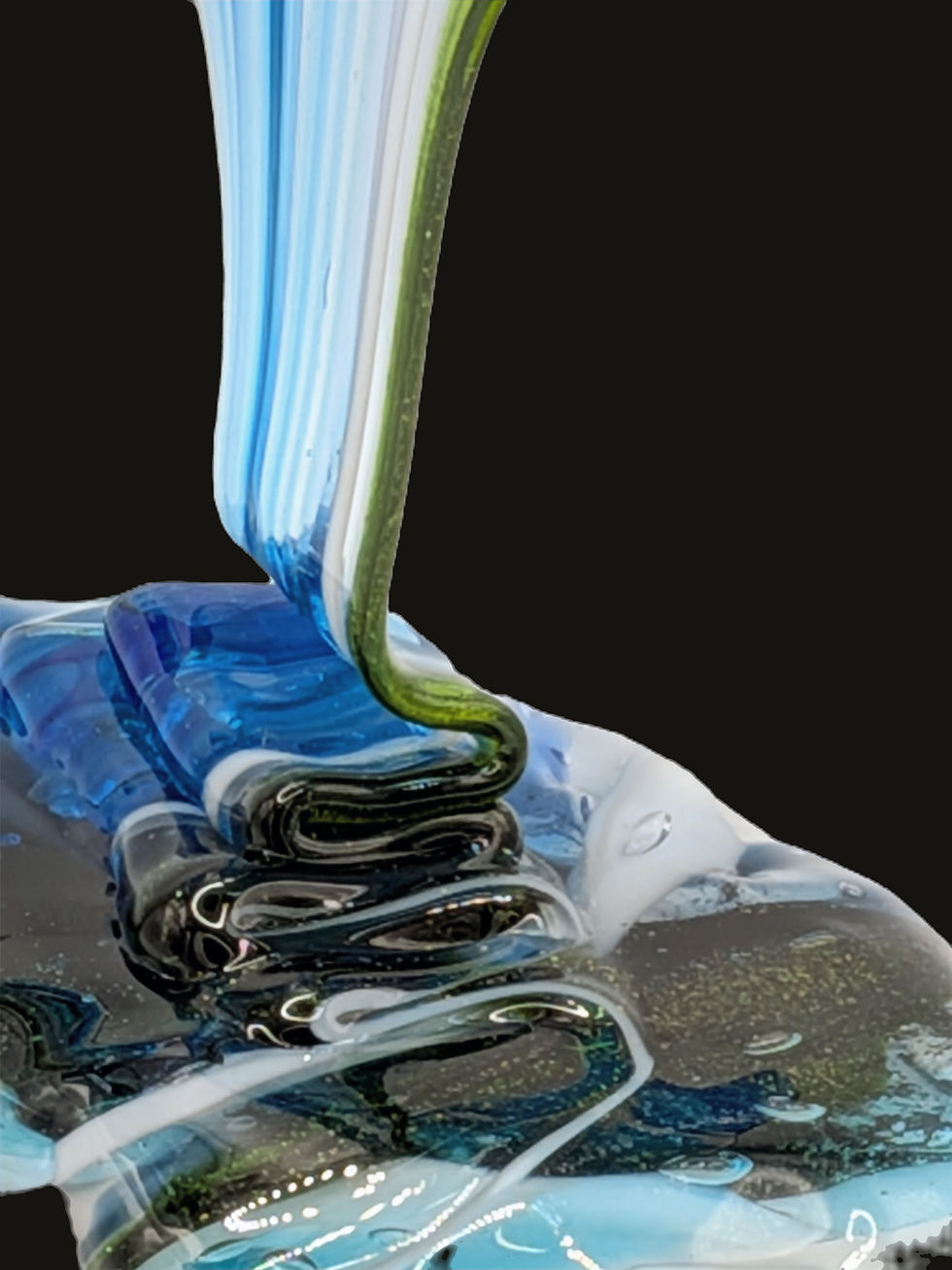
Movement — every piece captures something in motion: falling water, a rising wave, the slow pull of a current
Stillness — paradoxically, the finished sculpture holds that movement in permanent pause, like a photograph of something fluid
Unpredictability — the kiln plays its own role in every piece, and no two firings ever produce the same result
Materiality — the glass itself becomes the subject, not just the medium
The result is a body of work that feels different to anything else I make. These aren't decorative objects in the traditional sense — they're studies in what glass can hold when you ask it the right questions.
The Series
Flowform has grown into several distinct series, each one exploring a different aspect of movement and form.
The Waterfall Series is where Flowform began for me — a study of gravity and descent, each piece exploring the moment where falling water becomes something still and suspended.

Waterfall #1 First Descent and Waterfall #2 The Dividing Current belong to my personal collection, but they represent the creative foundation from which everything else in the series has grown. Future pieces will be released as they are created.
Flowform Vortex moves inward rather than downward. The Amber Vortex holds the imprint of quiet forces — subtle shifts in density, gradients of heat, and the slow settling of internal movement. Its surface carries traces of energy that has passed through it and resolved into luminous stillness. This piece is singular; its pattern can never be recreated, and it is available to purchase directly from my personal collection.
Flowforms of the Sea takes its inspiration from water in a different register — the rhythm and depth of the ocean rather than the drama of a waterfall. The first piece in this series, Blue Beneath The Wave, holds a soft blue wave in the act of rising and returning, with layered blues that drift from deep to pale like a tide that lifts and settles without urgency. This piece is currently available to purchase.
The Held Wave moves into new material altogether — a hand-sculpted porcelain curl sheltering a shimmer of fused glass, as if the sea left something folded inside its own breath. Like the Waterfall Series, this piece belongs to my personal collection, with future works to follow.
Flowform – Crafted for the table brings the same sensibility into everyday living — practical, hand-formed pieces designed to settle naturally into the spaces we actually inhabit. This is an evolving series, with new pieces being added over time, each one shaped with the same quiet attention to detail that runs through everything in the Flowform collection. You can explore the current collection here.
Why Glass, and Why Now
People sometimes ask me why I've chosen to develop a sculptural practice alongside the workshops rather than instead of them. The honest answer is that the two things feed each other in ways I didn't entirely anticipate.

Teaching glass fusing keeps me closely connected to the material — to what it does, how it behaves, and what people respond to when they encounter it for the first time. And that connection informs everything I make in Flowform. The wonder I see on people's faces when they collect their first fired piece is the same wonder I'm trying to capture in these sculptures — just taken a few steps further.
Glass has a quality that no other material quite replicates:
It holds light differently at different times of day
It changes depending on what's behind it and around it
It carries the history of its making in ways that are visible but hard to articulate
It rewards slowness — the longer you look, the more you see
These are the qualities I'm trying to draw out in Flowform. Not to show off what glass can do, but to create a genuine moment of pause for the person standing in front of it.
Where to Find Flowform
If you'd like to explore the full Flowform collection — including the pieces that are currently available to purchase — you can find everything on the website. And if something catches your eye or you'd like to know more about a particular piece, I'm always happy to hear from you directly.
Because these pieces are made one at a time, and many will only ever exist as a single work, getting in touch sooner rather than later is always the best approach.
Glass, heat, time, and something that can never quite be planned for — that's what Flowform is. And I hope, when you see these pieces, you feel even a small part of what I feel when they come out of the kiln.


Comments